How to Choose the Right Fabric for Custom Workwear: A Practical Guide for Buyers

Selecting fabric is one of the most important decisions in any custom workwear project. It affects how the uniform looks on day one, how employees feel after a long shift, and how the garment performs after months of washing and wear.
The best choice is rarely the heaviest fabric or the least expensive option. It is the fabric that matches the job, climate, care routine and brand image. Before approving bulk production, buyers should evaluate the following factors.
1. Start with the Working Environment
Fabric selection should begin with a clear picture of where and how the uniform will be worn.
Warehouse, construction and maintenance teams may need strong woven fabrics that resist abrasion and tearing. Delivery drivers and technicians often benefit from lighter stretch fabrics that support frequent movement. Customer-facing teams may place greater value on a smooth appearance, color consistency and wrinkle resistance.
Ask practical questions:
- Is the work mainly indoors or outdoors?
- Will employees face heat, rain, dust, oil or rough surfaces?
- Does the job involve bending, lifting or repeated arm movement?
- How long is a typical shift?
- Are there industry-specific safety requirements?
A fabric can perform well in one workplace and fail quickly in another. The working environment must therefore come before color, price or trend.
2. Balance Durability with Wearable Weight
Fabric weight is commonly expressed in grams per square meter (GSM), but a higher GSM does not automatically mean a better uniform.
Heavy cotton canvas and robust twill can provide excellent protection and abrasion resistance. However, they may feel hot or restrictive in warm environments. Lighter fabrics improve airflow and comfort, but they need the right fiber blend and construction to withstand daily use.
For many general-purpose uniforms, a medium-weight polyester-cotton twill offers a useful balance. For more demanding applications, ripstop construction can help limit the spread of small tears without adding excessive bulk.
The correct target weight should be confirmed through physical samples and wear testing, not selected from a specification sheet alone.
3. Compare the Most Common Fiber Options
Cotton
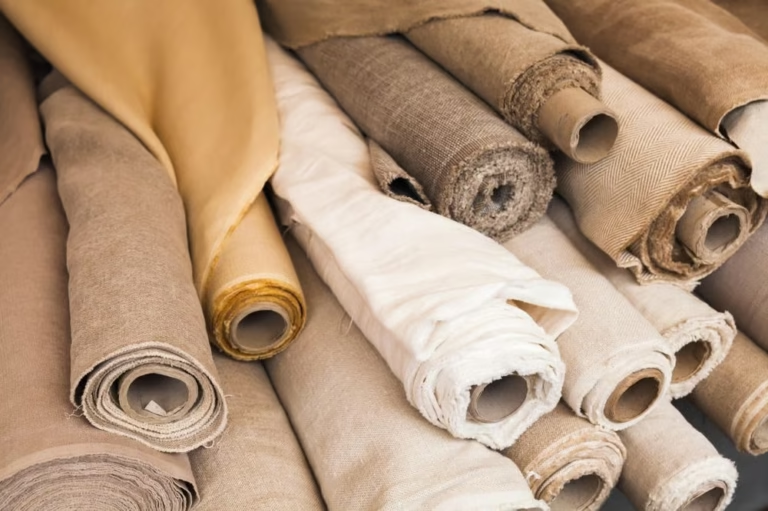
Cotton feels soft, breathable and comfortable against the skin. It is a strong option for warm environments and roles where natural hand feel matters. Pure cotton, however, may wrinkle, shrink or dry more slowly than blended alternatives.
Polyester
Polyester offers good dimensional stability, color retention and quick drying. It is widely used in uniforms that require frequent laundering and a consistently neat appearance. On its own, it may feel less breathable than cotton, so fabric structure and finishing remain important.
Polyester-Cotton Blends
Polyester-cotton blends combine comfort with easier care and durability. They are a versatile choice for factory, logistics, maintenance, hospitality and general corporate workwear. The blend ratio can be adjusted according to the desired balance of breathability, strength and appearance.
Stretch Blends
A small percentage of elastane can improve mobility in fitted trousers, jackets and shirts. Stretch is especially useful for technicians, drivers and employees who bend or reach frequently. Recovery should be tested to ensure the garment keeps its shape over time.
4. Evaluate Comfort During a Full Shift
Comfort is a performance requirement, not a luxury. An uncomfortable uniform may be worn incorrectly—or avoided altogether.
Breathability, moisture management, softness, stretch and seam compatibility all affect the wearer’s experience. Fabric should also be assessed together with the finished garment design. A breathable material cannot compensate for a pattern that is too tight or a construction with poor ventilation.
For active roles, consider moisture-wicking knits or lightweight woven fabrics with mechanical stretch. For cooler conditions, layered uniform systems are often more practical than relying on one heavy garment for every season.
5. Plan for Real-World Laundering
The cleaning method can determine which fabric is suitable.
Uniforms washed at home need easy-care performance and good wrinkle recovery. Garments processed by commercial laundries may face higher temperatures, stronger detergents and repeated tumble drying. Workwear exposed to grease or dirt must also release stains effectively.
Before production, test the proposed fabric for:
- Shrinkage and dimensional stability
- Colorfastness to washing and rubbing
- Pilling and surface abrasion
- Seam appearance after laundering
- Wrinkle recovery
- Compatibility with required wash temperatures
Testing the finished garment is preferable because trims, thread, interlining and reflective materials may react differently from the main fabric.
6. Consider Color and Brand Consistency
Uniform fabric carries a company’s visual identity. Dark navy, charcoal and khaki remain popular because they look professional and help conceal everyday marks, while brighter colors can improve visibility or distinguish departments.
Color should be reviewed under different lighting conditions. Buyers should also confirm how shade consistency will be controlled across production lots and repeat orders. If uniforms will be reordered over several years, keeping approved color standards and fabric references is essential.
Garments intended for outdoor use may require stronger resistance to sunlight and fading. High-contact areas should also be checked for color transfer during rubbing.
7. Calculate Cost per Wear, Not Only Unit Price
A low-cost fabric can become expensive if uniforms fade, shrink or tear early. The better measure is cost per wear: the total garment cost divided by the number of acceptable uses.
A slightly higher investment in stable, durable material may reduce replacement frequency, employee complaints and inconsistent brand presentation. At the same time, premium specifications should only be added when they solve a real operational need.
The most efficient fabric is the one that meets the required performance level without unnecessary features.
Approve Fabric with Samples and Wear Trials
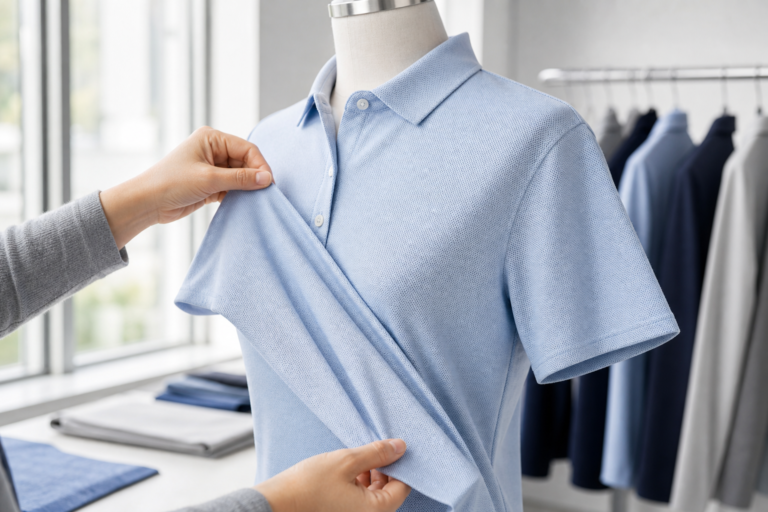
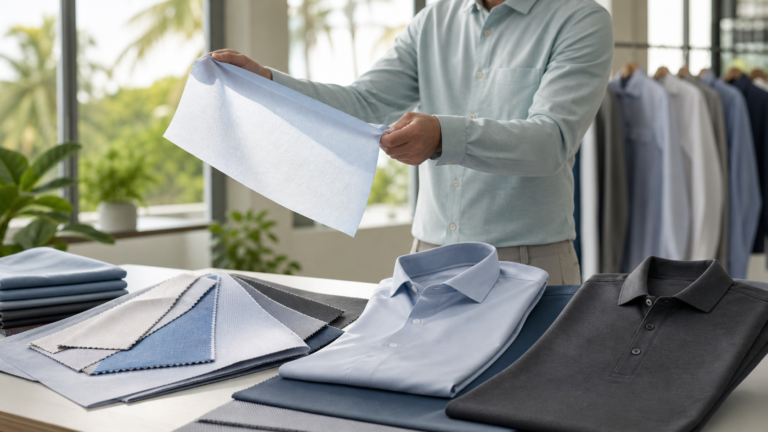
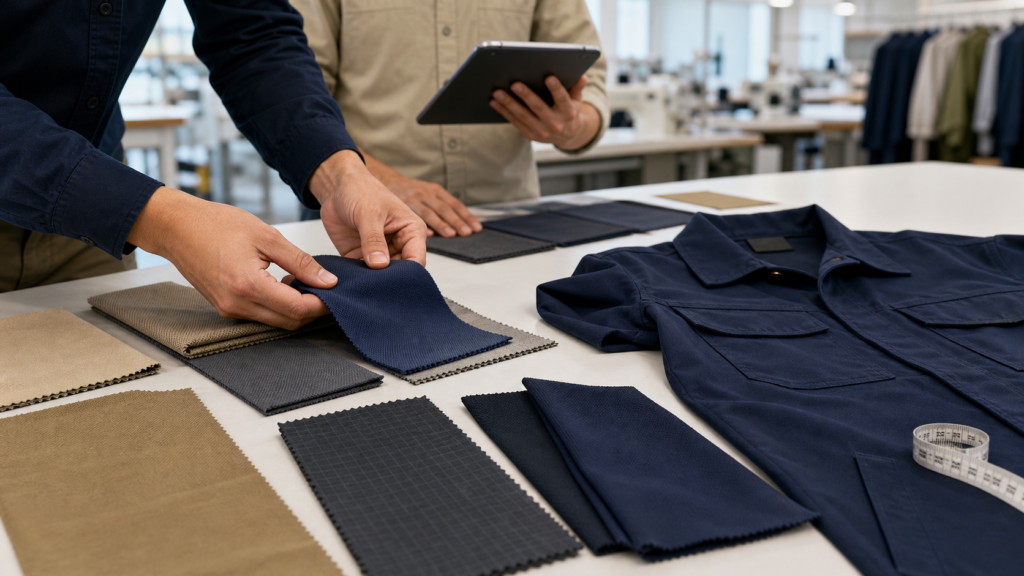
Technical data helps narrow the options, but it cannot replace touch, garment sampling and real use. Buyers should review swatches, compare lab results, approve a pre-production sample and—when possible—run a short wear trial with employees from the target role.
Their feedback can reveal issues that are easy to miss in a meeting room, such as heat buildup, restricted movement, pocket strain or uncomfortable surface texture.
A Better Fabric Choice Starts with Better Questions
Successful custom workwear begins with a clear brief. Define the working conditions, expected service life, cleaning process, visual requirements and target budget before selecting the material.
Shengli Apparel supports custom uniform projects from fabric comparison and sampling to garment development and bulk production. Share your workplace requirements with our team, and we can help identify a practical fabric solution for your employees and your brand.