Cotton — The World’s Most Popular Natural Fiber

Section 01
Cotton is the undisputed king of the textile world. Accounting for roughly 25% of global fiber consumption, it remains the default choice for everything from everyday T-shirts to premium bed linens. Its dominance isn’t accidental — cotton balances affordability, comfort, and versatility in a way few materials can match.
Sourced from the fluffy seed pods of the Gossypium plant, cotton fibers are primarily composed of cellulose. This gives the fabric its signature properties: exceptional moisture absorption, breathability, and the ability to keep the wearer cool in warm weather. Cotton also takes dye remarkably well, enabling the broad spectrum of colors seen in retail markets worldwide.
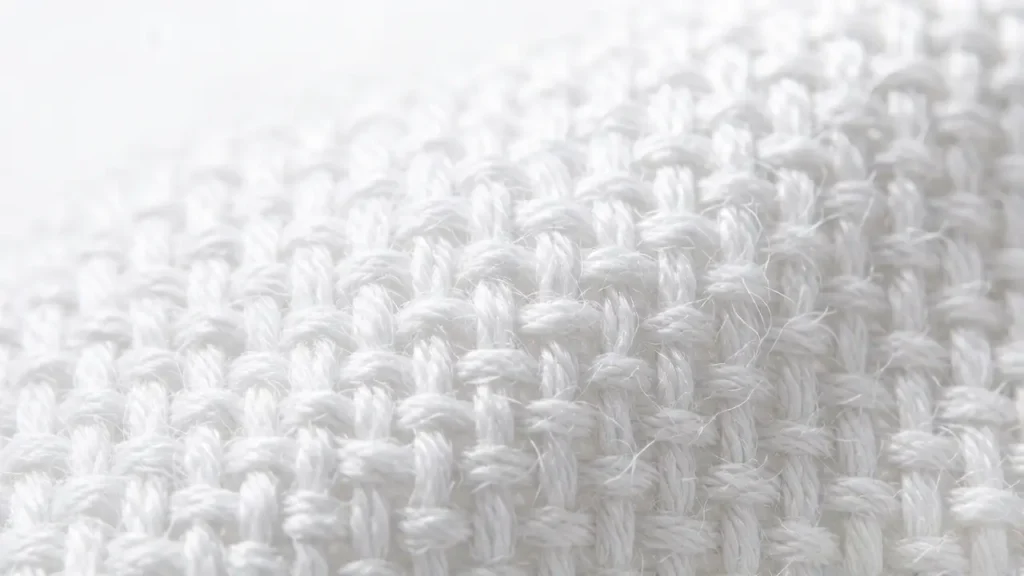
Macro photography of a 100% cotton plain-weave structure, illustrating its characteristic open fiber arrangement.
“Cotton’s cellular structure creates millions of tiny air pockets — that’s the science behind why a cotton shirt feels cool on a summer day.”
From a sourcing perspective, cotton quality is graded by staple length — the longer the fiber, the stronger and softer the resulting fabric. Extra-long staple (ELS) varieties such as Egyptian Giza and Pima cotton command premium pricing, while standard upland cotton drives volume production in mass-market garments.
One growing concern in the industry is the environmental footprint of conventional cotton farming, which relies heavily on irrigation water and pesticides. As a result, GOTS-certified organic cotton and Better Cotton Initiative (BCI) programs have gained significant traction among brands seeking more responsible sourcing options.
Section 02
Linen & Silk — Ancient Fibers, Modern Appeal
Few textiles carry the historical prestige of linen and silk. Linen, derived from the flax plant (Linum usitatissimum), dates back over 30,000 years and was considered so valuable in ancient Egypt that it was used as currency. Silk, reeled from the cocoons of the Bombyx mori silkworm, was the centerpiece of the legendary Silk Road trade network for centuries.
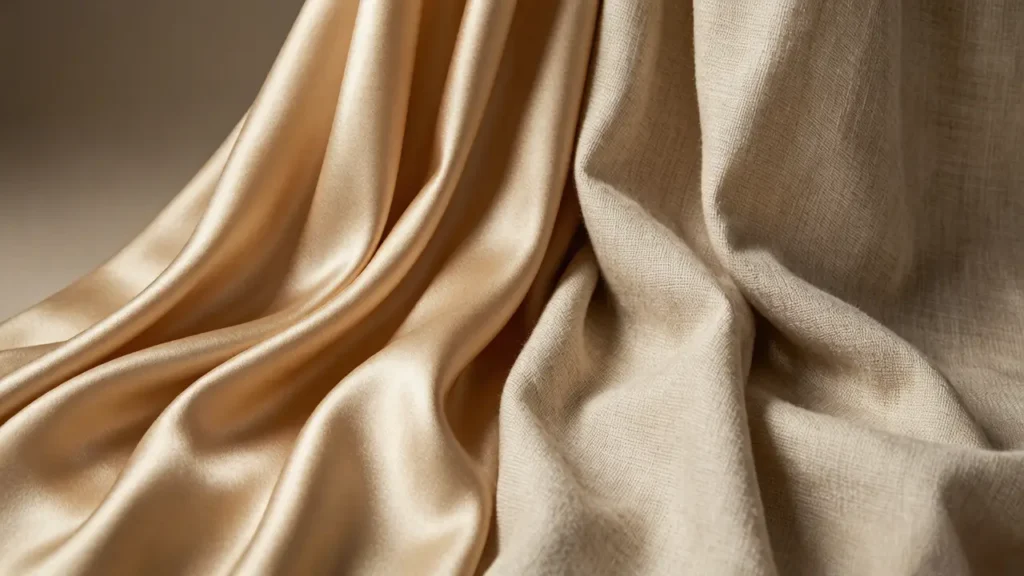
Champagne-tone silk alongside natural-weave linen: two fibers that defined luxury across civilizations.
Today, both fabrics are experiencing a strong commercial revival driven by consumer demand for premium natural materials. Linen is prized for its durability, natural texture, and exceptional moisture-wicking performance — properties that make it a top choice for warm-climate apparel and luxury homeware. With a tensile strength roughly 30% higher than cotton, linen garments hold their shape exceptionally well over time.
Silk, meanwhile, remains synonymous with luxury. Its triangular cross-section prism structure refracts light, creating the distinctive shimmery appearance that no synthetic fiber has fully replicated. Beyond aesthetics, silk is naturally hypoallergenic and thermo-regulating — qualities now being marketed aggressively in premium sleepwear and wellness-oriented apparel lines.
| Fabric | Key Fiber | Strength | Breathability | Price Tier |
|---|---|---|---|---|
| Cotton | Cellulose (seed pod) | Moderate | High | Economy – Mid |
| Linen | Cellulose (flax bast) | High | Very High | Mid – Premium |
| Silk | Protein (sericin/fibroin) | High (when dry) | High | Premium – Luxury |
| Wool | Keratin (protein) | High | Moderate | Mid – Luxury |
Section 03
Wool — Nature’s Original Performance Fabric
Before technical sportswear brands existed, wool was already a high-performance textile. Sheared from sheep (and in premium grades, from cashmere goats, alpacas, and vicuñas), wool’s crimped fiber structure traps insulating air pockets while simultaneously managing moisture through a process known as hygroscopic sorption — meaning wool can absorb up to 30% of its own weight in moisture without feeling wet.
The global wool market continues to diversify. Ultra-fine merino wool — with fibers measuring under 18.5 microns — has become a cornerstone of the premium outdoor and travel apparel segment. Brands positioned in the corporate uniform and workwear market increasingly specify Woolmark-certified fabrics to communicate quality and durability to institutional buyers.
The care requirements for wool have historically been seen as a barrier to adoption. However, machine-washable Superwash wool treatments and the rise of wool-blend fabrics (typically wool/polyester or wool/nylon) have substantially lowered this threshold, opening the fiber to broader mainstream acceptance.
“Merino wool can be worn for days without odor — a property rooted in its natural lanolin content and antimicrobial fiber structure, not chemical treatment.”
Key Takeaways for Buyers & Designers
- Cotton: Best for high-volume, everyday wear; look for GOTS or BCI certification for responsible sourcing.
- Linen: Ideal for warm-weather collections and premium homeware; improves with washing, develops a beautiful patina over time.
- Silk: Maximum luxury impact; specify momme weight (19–25mm is a strong retail standard) when sourcing.
- Wool: The performance natural fiber; merino grade and micron count are the critical quality indicators.
- Blending natural fibers with a small percentage of elastane or recycled polyester can significantly extend product life while preserving natural-fiber aesthetics.