Fabric Selection for Corporate Uniforms in Hot and Humid Climates

Corporate uniforms must do more than create a consistent appearance. In hot and humid regions, they also need to help employees stay comfortable through long shifts, frequent movement and rapid changes between outdoor heat and air-conditioned interiors.
Choosing the right fabric requires more than selecting the lightest material available. Breathability, moisture movement, drying speed, opacity, wrinkle recovery and laundering performance must work together. Here is how buyers can build a better uniform specification for warm climates.
Why Humidity Changes the Fabric Decision
In dry heat, perspiration can evaporate relatively quickly. High humidity slows that process, allowing moisture to remain on the skin and garment. A fabric that feels comfortable in a cool showroom may therefore become heavy, sticky or slow-drying during actual use.
Warm-climate uniforms should help move heat and moisture away from the body without becoming transparent, losing shape or looking overly casual. The right solution depends on the role: a hotel receptionist, outdoor service technician and restaurant employee may all need different fabrics.
1. Prioritize Breathability—and Test the Construction
Breathability is influenced by fiber type, yarn, weave or knit structure, fabric weight and finishing. Fiber content alone does not tell the whole story.
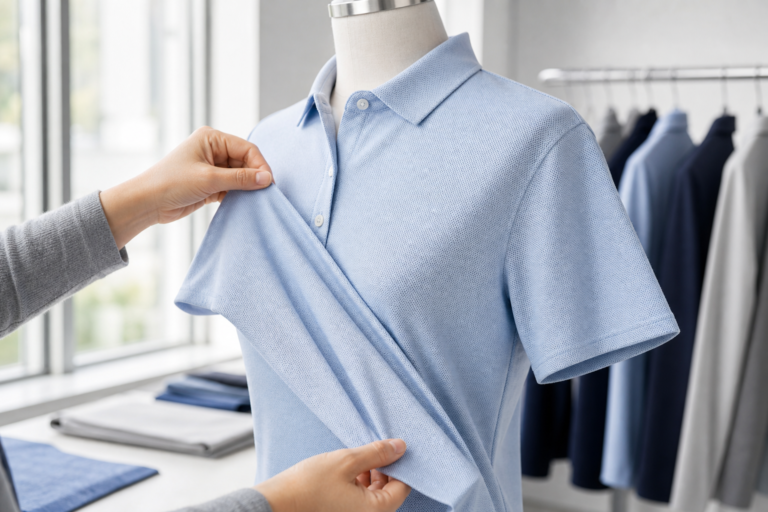
Lightweight poplin and open plain weaves can support airflow in shirts and blouses. Piqué knit is widely used for polo shirts because its textured structure can improve air circulation while maintaining a professional surface. Lightweight stretch wovens can suit active roles when the construction is not too dense.
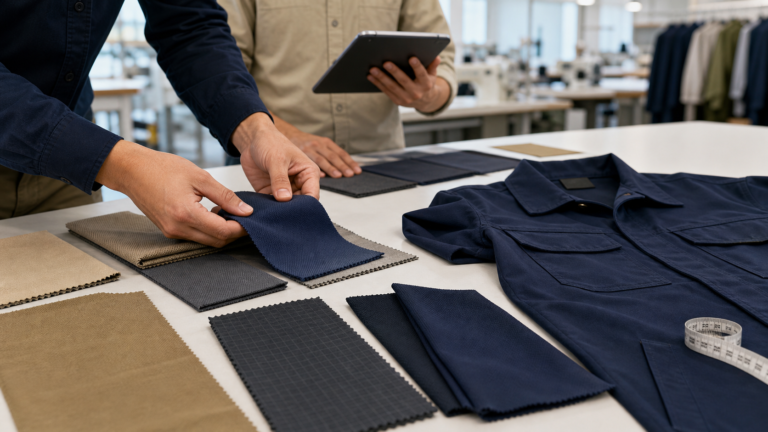
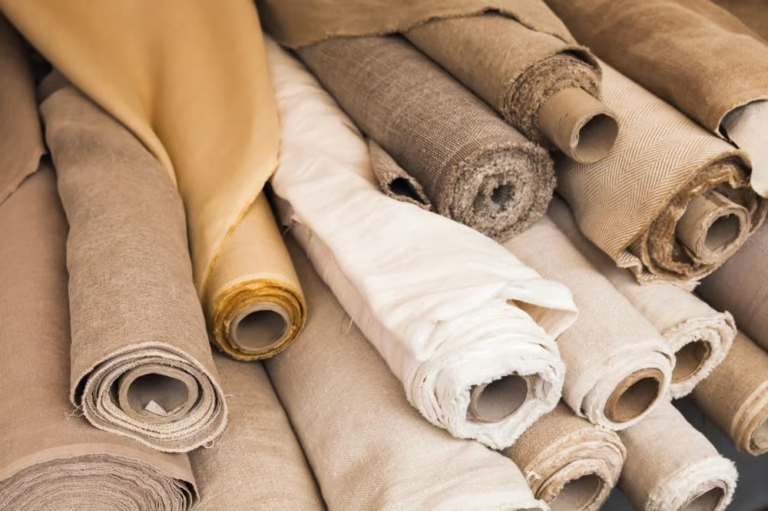
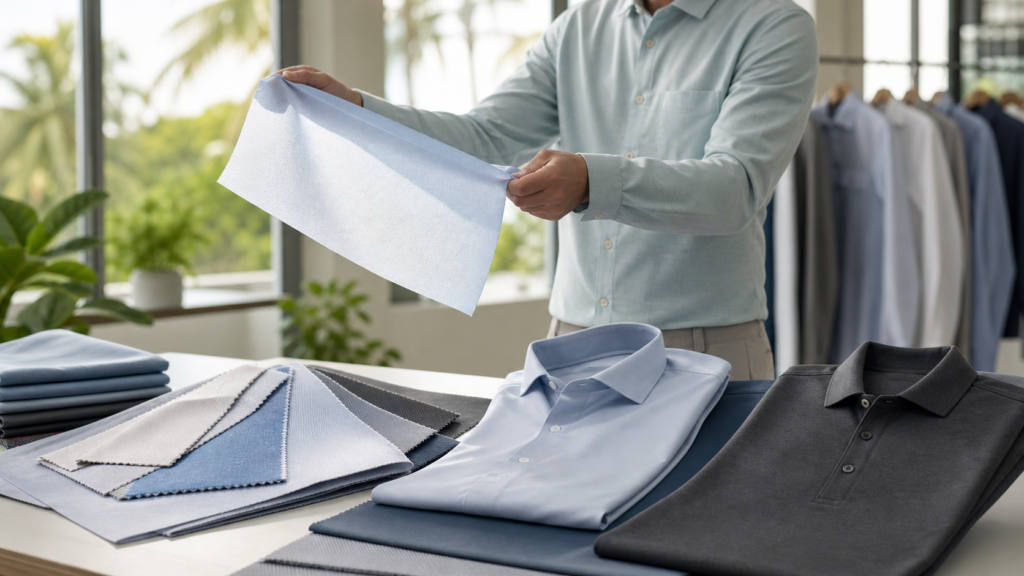
Buyers should compare actual swatches and finished samples. Two fabrics with the same composition and weight may feel very different because of their construction.
2. Choose Moisture Management for the Activity Level
For highly active teams, moisture-wicking performance can be more important than a natural-fiber feel. Wicking fabrics spread moisture across a larger surface area so it can dry more efficiently.
Quick-drying polyester knits are practical for delivery, facilities, event and outdoor service teams. Cotton-rich fabrics may feel softer and more familiar, but they can retain moisture longer. A cotton-polyester blend often provides a balanced option for moderate activity and customer-facing roles.
Moisture management should be verified after repeated washing, especially when it depends on a chemical finish. Performance that disappears after a few laundry cycles will not support a long-term uniform program.
3. Keep Fabric Weight Light but Not Fragile
Reducing weight can improve comfort, but excessively thin fabric may create new problems. It can become transparent under strong light, show perspiration easily, lose structure or wear through at stress points.
The ideal fabric is light enough for the climate but stable enough for the garment design. Shirts need sufficient opacity and collar support. Trousers require more abrasion resistance and body than tops. Jackets used only in air-conditioned spaces may use a light, partially lined or unlined construction.
Rather than applying one fabric to every item, create a coordinated fabric system for shirts, polos, trousers, skirts and outer layers.
4. Use Stretch Strategically
Stretch improves comfort when employees sit, reach, bend or move continuously. It can be created with elastane or through mechanical stretch in the fabric structure.
For warm climates, moderate stretch is usually more useful than a heavy, highly elastic material. The fabric should recover after movement and should not cling excessively to the body. Garment fit and ease remain just as important as stretch percentage.
Key areas such as shoulders, armholes, seat and knees should be evaluated on a fitting sample before bulk approval.
5. Select Colors That Work in Heat and Daily Service
Light colors can feel visually cooler and may absorb less solar heat than very dark shades, making them useful for outdoor roles. However, pale fabrics can reveal stains or become transparent, while dark colors may show salt marks from perspiration.
Medium tones—such as soft blue, stone, grey, muted teal or mid-navy—often provide a practical compromise. Color blocking can also place darker shades in high-contact areas and lighter shades where visual freshness matters.
Whichever palette is chosen, test colorfastness to washing, rubbing and perspiration. Outdoor garments may also require testing for light exposure.
6. Do Not Sacrifice Wrinkle Recovery
Heat and humidity can quickly make a uniform look untidy. Wrinkle-resistant fabrics help customer-facing teams maintain a polished appearance throughout the day and reduce ironing requirements after washing.
Polyester blends generally provide easier care than pure cotton. Finishes can improve wrinkle recovery in cotton-rich materials, but they should be assessed for hand feel and durability. A fabric should not become stiff or less breathable simply to achieve a smoother appearance.
The finished garment should be checked after realistic washing, drying and wearing—not only when freshly pressed.
7. Match Fabric to the Employee’s Role
Front Office and Hospitality
Look for lightweight woven fabrics with a smooth appearance, good opacity and reliable wrinkle recovery. Cotton-rich or polyester-cotton poplin can be suitable depending on the care process.
Outdoor and Mobile Teams
Prioritize quick drying, UV-related performance where required, freedom of movement and durable color. Moisture-wicking polos and lightweight stretch trousers are common solutions.
Food Service and Housekeeping
Choose fabrics that release stains, tolerate frequent washing and dry efficiently. Breathable panels or lighter constructions may improve comfort in hot service areas.
Technical and Maintenance Roles
Balance ventilation with abrasion resistance and any required protection. Ripstop or lightweight workwear twill may be more appropriate than standard shirting.
A Simple Warm-Climate Approval Checklist
Before confirming production, ask:
- Does the fabric remain comfortable after several hours of wear?
- Does it dry quickly after perspiration or washing?
- Is it sufficiently opaque in daylight?
- Does it retain shape after repeated laundering?
- Does the color remain stable against washing, rubbing and perspiration?
- Can employees move easily in the complete garment?
- Does the uniform still look professional at the end of a shift?
A small wear trial in the real workplace is the most reliable way to answer these questions.
Build Comfort into the Uniform from the Start
The best hot-weather uniform is not defined by one “perfect” fiber. It comes from the right combination of fabric structure, weight, moisture management, garment design and care method.
Shengli Apparel works with businesses to develop custom uniforms for different climates and job requirements. From breathable shirts and moisture-wicking polos to coordinated trousers and outer layers, our team can help compare materials, prepare samples and refine the specification before bulk production.