Understanding Twill Weave: Why It Remains a Workwear Essential

Twill is one of the most familiar structures in professional uniform fabrics. It is easy to recognize from its subtle diagonal lines, but its real value is not only visual. The weave creates a fabric that feels structured, moves well, and presents a clean surface for daily business, service, and workwear use.
For apparel buyers, understanding twill helps make fabric decisions more practical. A uniform is not only judged when it is new. It also needs to keep a tidy look through repeated wearing, washing, packing, and handling.
The Structure Behind the Diagonal Line
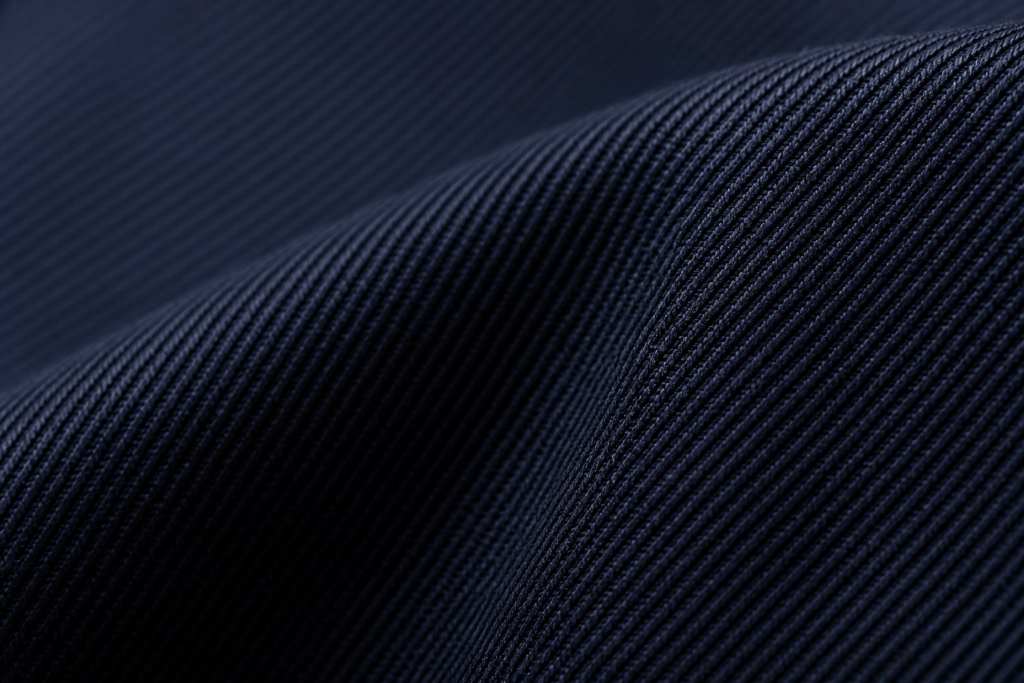
In a twill weave, yarns pass over and under each other in a staggered pattern. This creates the diagonal rib that appears across the surface. Compared with a plain weave, twill often has a more fluid hand feel and a denser visual texture.
That balance is why twill is often selected for shirts, trousers, jackets, chef coats, and service uniforms. It can look refined enough for customer-facing roles while still feeling suitable for active daily movement.
Where Twill Works Best
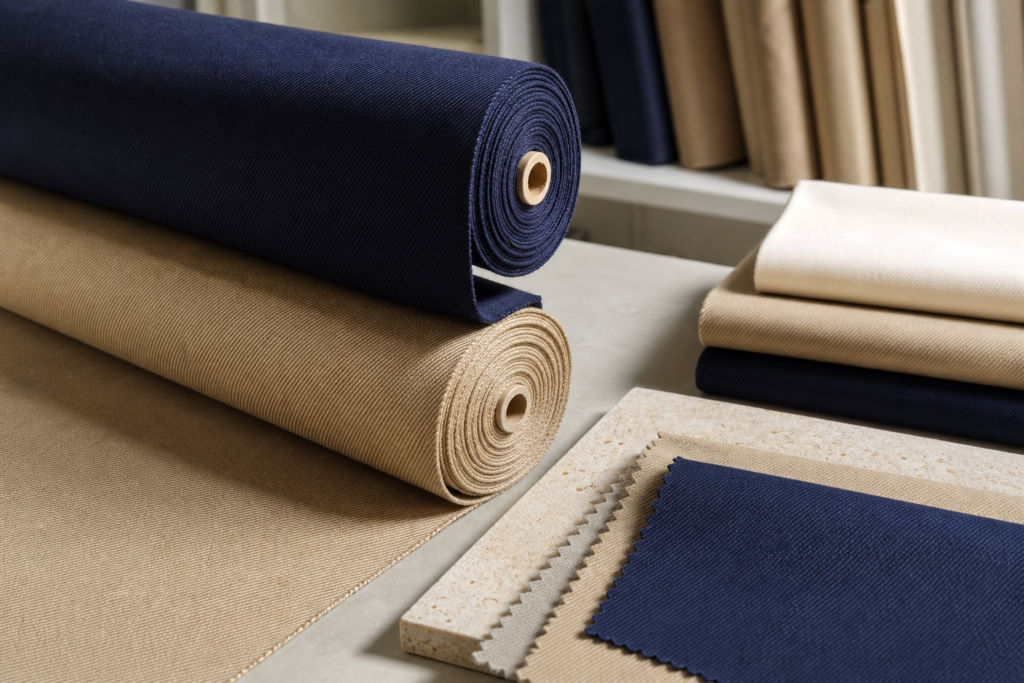
Twill is especially useful when the garment needs a slightly more structured appearance. Navy, grey, khaki, and black twill fabrics are common in team uniforms because they create a professional base and pair easily with embroidery, contrast trims, or brand color accents.
Different twill weights can serve different roles. Lighter twill works well for shirts and warm-weather uniforms, while heavier twill is often used for trousers, overshirts, and outer layers.
What Buyers Should Review
Before confirming a twill fabric, buyers should check hand feel, weight, color depth, shrinkage performance, and the way the fabric behaves after washing. A fabric that looks excellent on a swatch should also be reviewed as a finished garment sample.
The best twill choice is not simply the thickest or the smoothest. It is the one that fits the role, season, brand image, and expected care conditions of the uniform program.