Why Cotton-Linen Blends Work So Well for Everyday Uniforms

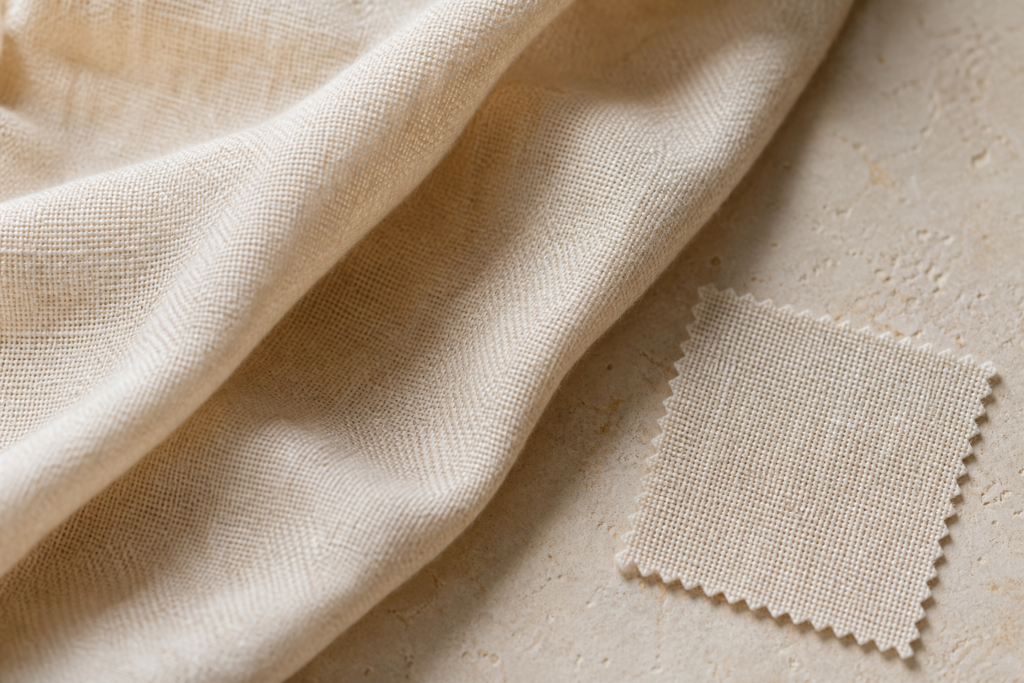
Cotton and linen are two of the most familiar natural fibers in apparel, but their real value becomes clearer when they are used together. A well-developed cotton-linen blend brings the soft, approachable hand feel of cotton together with the dry touch, breathability and natural texture of linen.
For uniforms and team apparel, this balance matters. Pure linen can look refined and feel cool, yet it may crease quickly and can require more careful handling. Cotton is comfortable and easy to wear, but a heavy cotton fabric may feel warm in humid conditions. Blending the two fibers creates a fabric that feels lighter, looks more dimensional and remains suitable for daily use.
What the Blend Brings to the Garment
Cotton helps make the fabric soft against the skin and improves color consistency. Linen contributes a crisp, breathable character and gives the surface a subtle irregular texture that makes the garment feel less flat. The result can work especially well for casual shirts, resort-style uniforms, summer overshirts and relaxed hospitality apparel.
What Buyers Should Check Before Approval
Fiber content alone does not define performance. Buyers should also review fabric weight, weave density, shrinkage, colorfastness and the finished garment’s wrinkle recovery. A slightly denser cotton-linen fabric may be better for uniforms that need opacity and structure, while a lighter quality can suit warm-weather shirts and leisurewear.
It is also important to test a finished sample after washing. This allows the team to assess how the fabric softens, whether the shape remains stable and how the texture develops in real use. When the right quality is selected, cotton-linen blends can give workwear a more natural, elevated appearance without losing everyday practicality.