The Future of Fabric Selection — How Smart Textiles & Sustainable Innovation Are Reshaping the Industry

Fabric Selection Enters the Age of Intelligence
Fabric selection is no longer just about aesthetics. In 2026, the criteria for choosing the right material have expanded dramatically to include performance, sustainability, longevity, and even intelligence. Driven by groundbreaking innovations in smart textiles, bio-based materials, and self-healing fibers, the fabric industry is undergoing its most transformative period in decades.
The smart textiles market alone has surpassed all forecasts, hitting $9.61 billion in 2026 with a staggering compound annual growth rate (CAGR) of 28.9%. This represents a seismic shift in how brands, designers, and consumers approach fabric selection. Heuritech
🔬 Self-Healing Textiles: Fabrics That Fix Themselves
Perhaps the most remarkable innovation influencing fabric selection in 2026 is the advent of self-healing textiles. Using micro-encapsulated agents and light-responsive polymers, these fabrics can now repair small tears or abrasions without human intervention, restoring up to 70% of the original material’s strength.
This breakthrough has significant implications for fabric selection across industries — from high-performance sportswear to military applications and everyday consumer garments. Choosing a self-healing fabric means investing in longevity and reducing textile waste.
⚡ Smart Fabrics: Three Pillars of the $9.61B Revolution
The explosive growth in smart textiles is driven by three core technological pillars that are redefining fabric selection criteria:
1. Energy Harvesting
Breakthroughs in piezoelectric and thermoelectric fibers allow textiles to capture energy from body movement or ambient heat, powering embedded sensors and microcontrollers. Imagine a jacket that charges your wearable device as you walk.
2. Nano-Materials & Self-Cleaning
The integration of nanotechnology creates textiles that are inherently anti-microbial and self-cleaning, extending the garment’s usable lifespan far beyond traditional fabrics.
3. IoT-Integrated Healthcare & Defense
From real-time biometric tracking for remote patient monitoring to adaptive camouflage for military applications, smart textiles are evolving into intelligent platforms for mission-critical uses. Heuritech
🌱 Sustainable Fabric Selection: Bio-Based Materials Go Mainstream
Sustainability is no longer a “nice-to-have” — it’s a non-negotiable factor in modern fabric selection. The EU’s regulatory push for fully recyclable clothing by 2030 has accelerated the adoption of eco-friendly materials:
| Material | Description | Market Projection |
|---|---|---|
| Lyocell | High-value cellulose fiber from sustainably managed forests | $3.4 billion by 2032 |
| Mycelium Leather | Mushroom-based alternative to traditional leather | $336 million by 2033 |
| Algae-Based Textiles | Sustainable alternatives derived from marine organisms | Rapidly growing |
| Recycled Polyester & Nylon | Post-consumer recycled materials | Fastest-growing segment |
| Upcycled Luxury | Innovative use of by-products (e.g., salmon skin by Thalie Paris) | Niche but expanding |
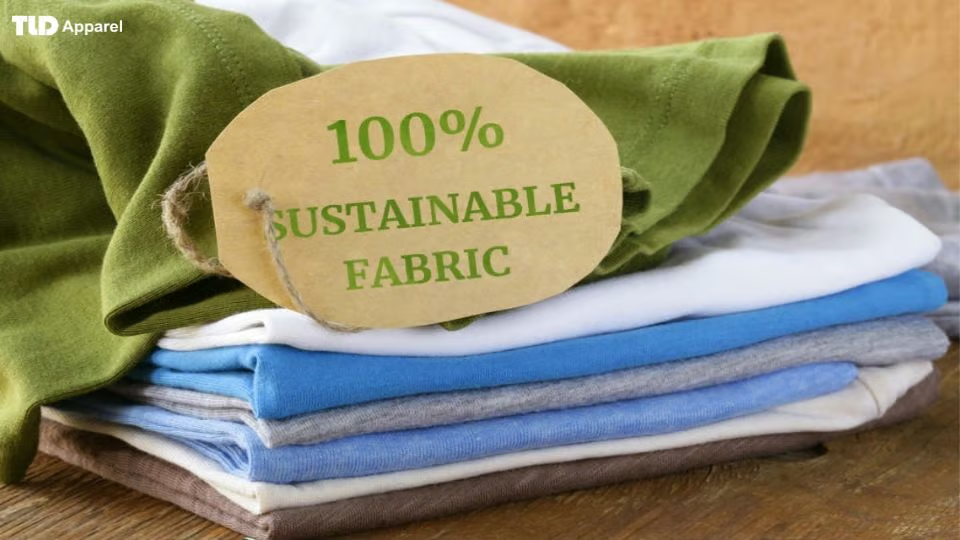
Eco-friendly fabrics are now topping textile trends, with recycled polyester and nylon growing rapidly as the industry prepares for stricter environmental regulations. Svegea
🌡️ Advanced Thermoregulation: Climate-Adaptive Fabric Selection
Another critical development is the rise of Phase Change Materials (PCMs) infused with graphene. These next-generation fabrics actively adjust the wearer’s micro-climate — absorbing excess heat during physical activity and releasing it as the body cools.
For brands in sportswear, outdoor gear, and athleisure, fabric selection now means choosing materials that go beyond static insulation to deliver dynamic climate management. This trend is pushing performance apparel into all-day wear scenarios, blurring the line between activewear and everyday clothing. Heuritech
🧬 What This Means for Fabric Selection Going Forward
The fabric selection process in 2026 demands a multi-dimensional approach:
- Aesthetic Appeal — Does the fabric align with current print, texture, and color trends?
- Performance — Does it offer thermoregulation, self-healing, or antimicrobial properties?
- Sustainability — Is it bio-based, recyclable, or produced with minimal environmental impact?
- Intelligence — Can it harvest energy, monitor health, or integrate with IoT systems?
- Regulatory Compliance — Does it meet evolving EU and global sustainability standards?