
Fashion History in the Digital Age: How Modern Education Is Unlocking Style’s Past — and Shaping Its Future — in 2026

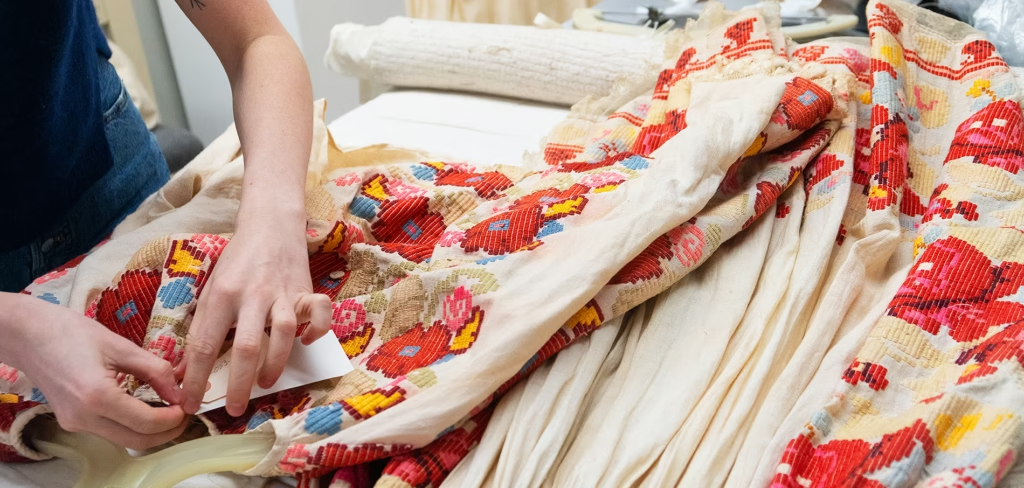
Understanding where fashion comes from is perhaps the most underrated form of fashion knowledge. In 2026, a remarkable convergence of digital technology, institutional commitment, and cultural curiosity is making fashion history more accessible, more engaging, and more relevant than it has ever been — and this accessibility is transforming how the next generation of designers, stylists, and consumers thinks about clothing.
The digitization of fashion archives stands as one of the decade’s most significant contributions to fashion knowledge. Institutions like the Fashion Institute of Technology (FIT)

and the Victoria & Albert Museum have dramatically expanded their online collections, making tens of thousands of historic garments viewable — and in some cases virtually “wearable” — through immersive digital exhibitions and augmented reality tools. A student in Seoul or São Paulo can now examine the stitching detail of an 1890s Worth couture gown or compare silhouette evolution across three centuries of European dress, all without leaving their home.
Online fashion history education has simultaneously exploded in scale and quality. Platforms now offer everything from compact introductory certificates to comprehensive graduate-level programs in fashion history, theory, and museum practice. The Class Central

platform alone lists over 1,800 fashion history courses available online in 2026, many entirely free, many offering accreditation. The Fashion Forward Virtual Conference 2026

brings together teachers, museum professionals, independent scholars, and academics globally — a testament to the vibrant, interconnected nature of contemporary fashion scholarship.
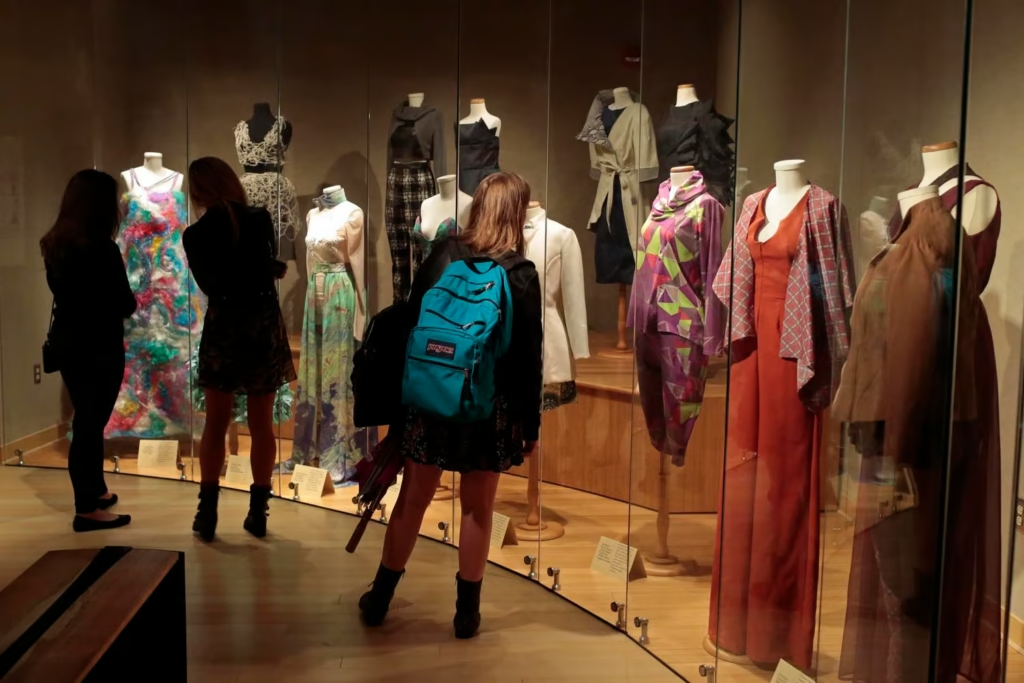
Why does fashion history matter in a world of fast trend cycles and algorithmic styling? Because historical literacy is the antidote to manipulation. A consumer who understands that “quiet luxury” echoes 1970s minimalism, that oversized silhouettes have cyclically returned since the 1980s, and that today’s “new” aesthetic almost always draws from a recognizable historical lineage is far less susceptible to manufactured urgency and far more empowered to build a coherent, enduring personal style.
Fashion history also provides the ethical grounding that modern fashion knowledge demands. Understanding the labor conditions, cultural exchanges, colonial dynamics, and social hierarchies that have shaped dress across centuries contextualizes today’s debates about cultural appropriation, fast fashion exploitation, and the globalization of style. As Glamour Observer notes in its 2026 guide to the world’s best fashion schools, institutions that weave history and theory into their curricula are producing the industry’s most thoughtful and versatile graduates.
In 2026, knowing fashion history is not academic — it is strategic, creative, and empowering. The past is not behind fashion. It is woven into every seam. Source