Fabric GSM Explained: What Uniform Buyers Should Check Beyond Weight

Two uniform fabrics can share the same weight and still produce very different garments. One may create a crisp shirt, while another feels soft and flexible. A weight specification helps buyers compare options, but it becomes useful only when it is read alongside the fabric’s construction, finish, and intended use.
Two uniform fabrics can share the same weight and still produce very different garments. One may create a crisp shirt, while another feels soft and flexible. A weight specification helps buyers compare options, but it becomes useful only when it is read alongside the fabric’s construction, finish, and intended use.
For a new uniform order, the starting question is simple: what does the team need the finished garment to do during a normal working day?
What Does GSM Mean?
GSM means grams per square metre. It describes the mass of a defined area of fabric. For example, a 200 GSM fabric has a nominal mass of 200 grams per square metre under the stated measurement conditions. This figure describes the material before it is turned into a particular garment; it does not tell you how much a finished shirt weighs.
ASTM publishes test methods for fabric mass per unit area. When comparing supplier reports, ask which method, sampling approach, and conditions were used so that the results have a consistent basis.
Compare Like with Like
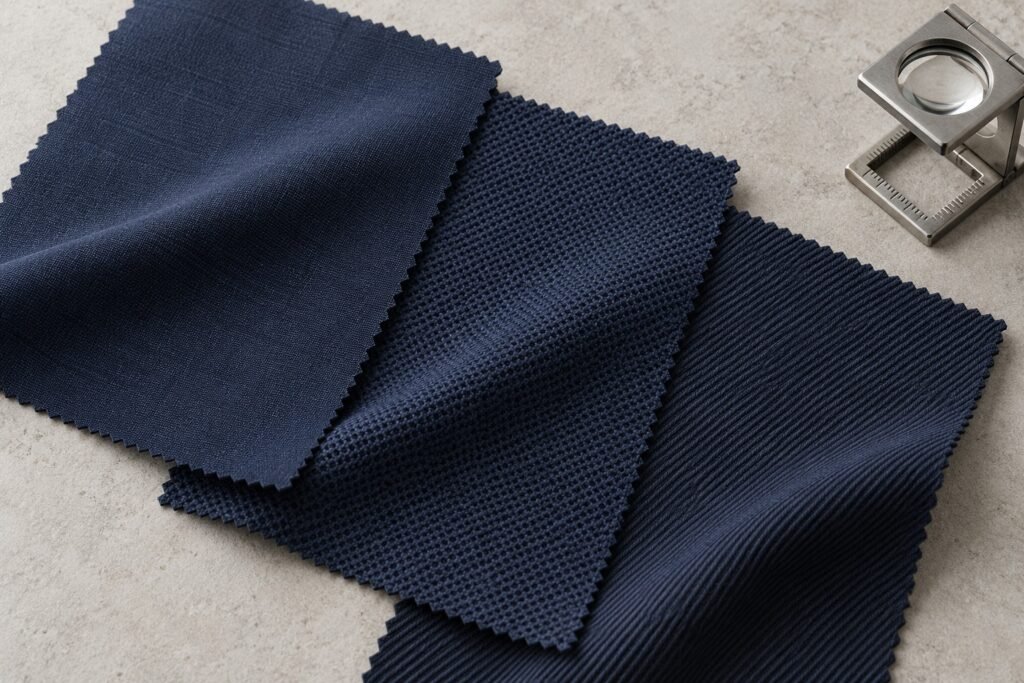
A meaningful comparison starts with a similar garment category. Compare shirting candidates with other shirting candidates, and polo fabrics with other polo fabrics. A woven shirt fabric and a knitted polo fabric may share a GSM value while differing in stretch, surface texture, and drape.
Request the fibre composition, weave or knit structure, finish, and finished weight for each option. Keep a physical reference swatch with its identification code. This creates a clearer brief than a request for a fabric that is simply “thicker” or “more premium.”
Check the Garment in Its Actual Setting
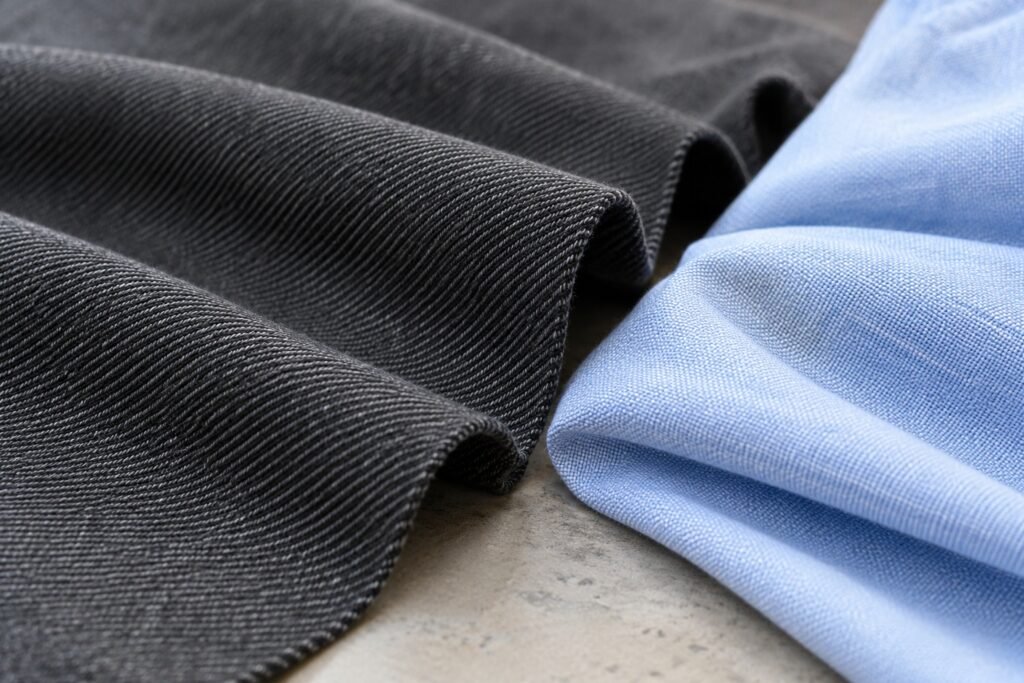
Use the shortlisted fabric in a garment sample and review it under workplace lighting. For a pale shirt, check coverage over the intended base layer. For trousers, examine the seated position and the appearance around pockets. For a jacket, look at how the material falls across the shoulders and front opening.
Ask wearers to sit, reach, walk, and bend as they would during a shift. Record their observations separately from the purchasing team’s comments on appearance. A material can photograph well while creating practical difficulties in movement or layering.
Treat Comfort and Durability as Separate Questions
Weight alone does not establish breathability, abrasion resistance, or suitability for a particular care process. Define the properties that matter for the job and ask for relevant evidence rather than using GSM as a substitute for every performance requirement.
For example, a reception shirt may need a smooth appearance under a jacket, while a service overshirt may need usable pockets and freedom of movement. Those priorities can lead to different constructions even when both garments belong to the same brand wardrobe.
Write a Clear Approval Record
Before confirming bulk production, record the approved fabric reference, composition, construction, finished GSM, colour reference, and agreed weight tolerance. Add the sample approval date and the care process used during evaluation.
If a substitute fabric is proposed later, review it against the complete record. Matching the original GSM is one checkpoint; the replacement should also be assessed for appearance, fit, handling, and agreed performance.
Build the Brief Around the Working Day
The most useful fabric specification connects a measurable material description with a real garment requirement. Start with the role, workplace, and care routine, then compare a small set of documented options. This approach gives buyers a stronger basis for discussion than choosing the highest or lowest weight on a swatch card.
Planning a custom uniform programme? Share your garment types, working conditions, and fabric priorities with Shengli Apparel to discuss the next sampling step.