Pocket Design in Work Uniforms: Function Meets Modern Style

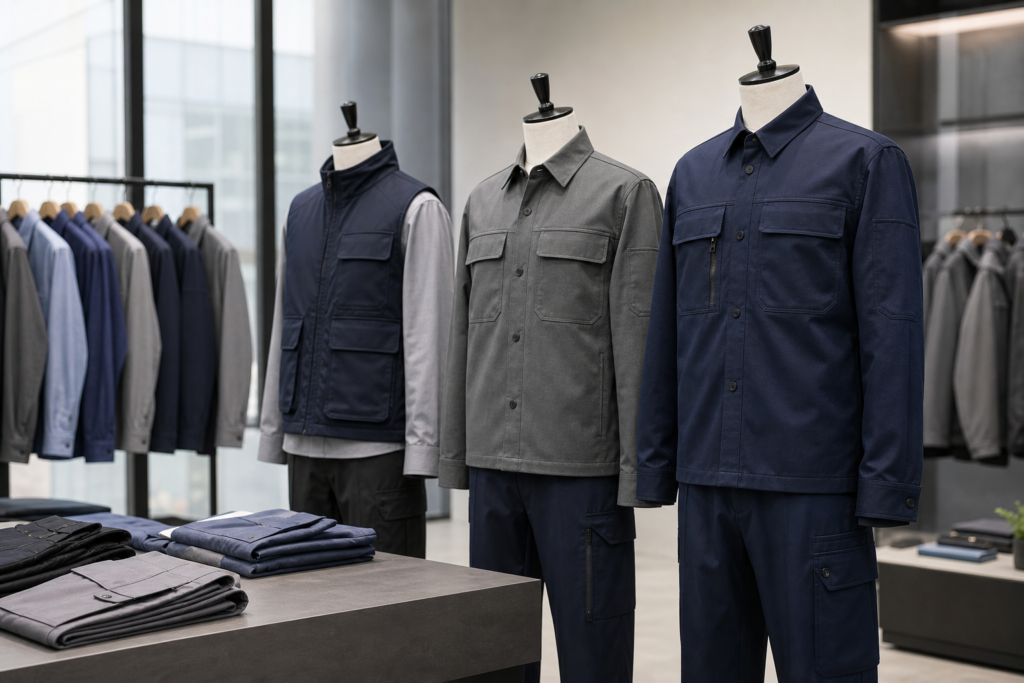
Pocket design is often treated as a small detail, but in work uniforms it can shape both function and style. A pocket can hold tools, pens, phones, cards, or work notes. At the same time, it changes the visual balance of the garment.
For modern workwear, pocket design should be planned with the job role in mind. Too few pockets may reduce practicality, while too many pockets can make a uniform look heavy or busy.
Choose Pocket Types by Role
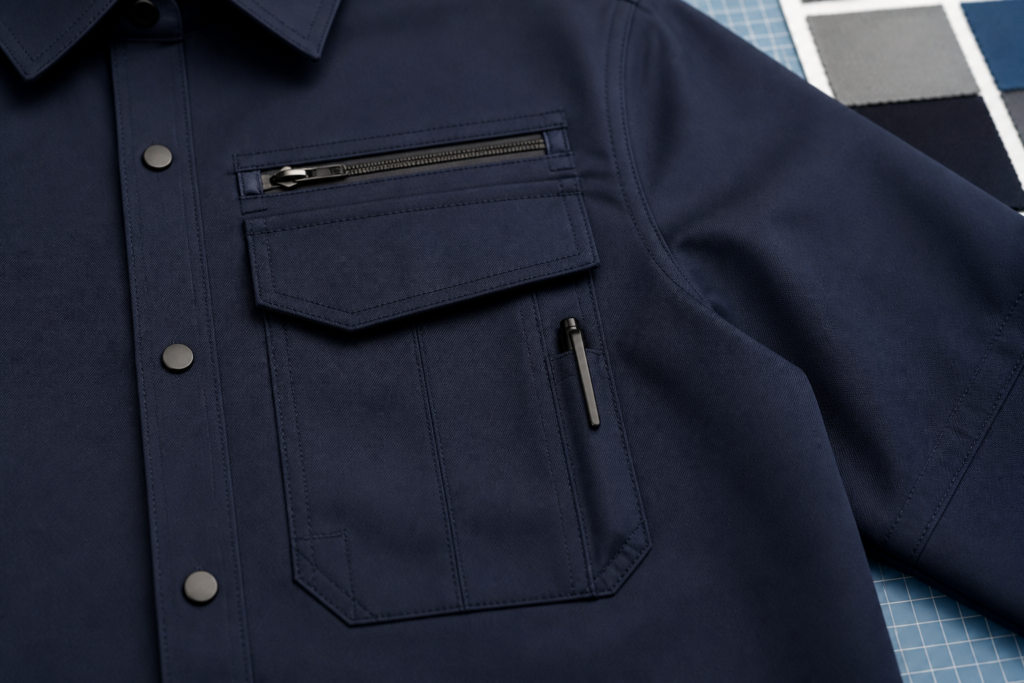
Chest pockets are useful for shirts, overshirts, jackets, and vests. Flap pockets offer a structured look and help protect small items. Zipper pockets can be useful when workers need more secure storage. Pen slots and hidden pockets can add function without making the design look crowded.
For trousers, side pockets, cargo pockets, and back pockets should be positioned carefully so they do not interfere with movement or sitting comfort.
Keep the Garment Balanced
Pocket size and placement should match the garment proportions. A large pocket on a small shirt may look oversized. A small pocket on a heavier jacket may feel visually weak. Stitching, flap shape, button choice, and zipper color should also support the overall design.
When the pocket details are consistent across shirts, jackets, and trousers, the full uniform program looks more coordinated.
Test Before Bulk Production
Pocket design should be checked on a sample garment, not only in a drawing. Buyers should confirm opening size, depth, seam strength, and whether the wearer can use the pocket comfortably during work.
Good pocket design adds value quietly. It helps the uniform work better while giving the collection a more refined and professional look.