
Mastering the Custom Suit Experience: A Journey Through Premium Tailoring

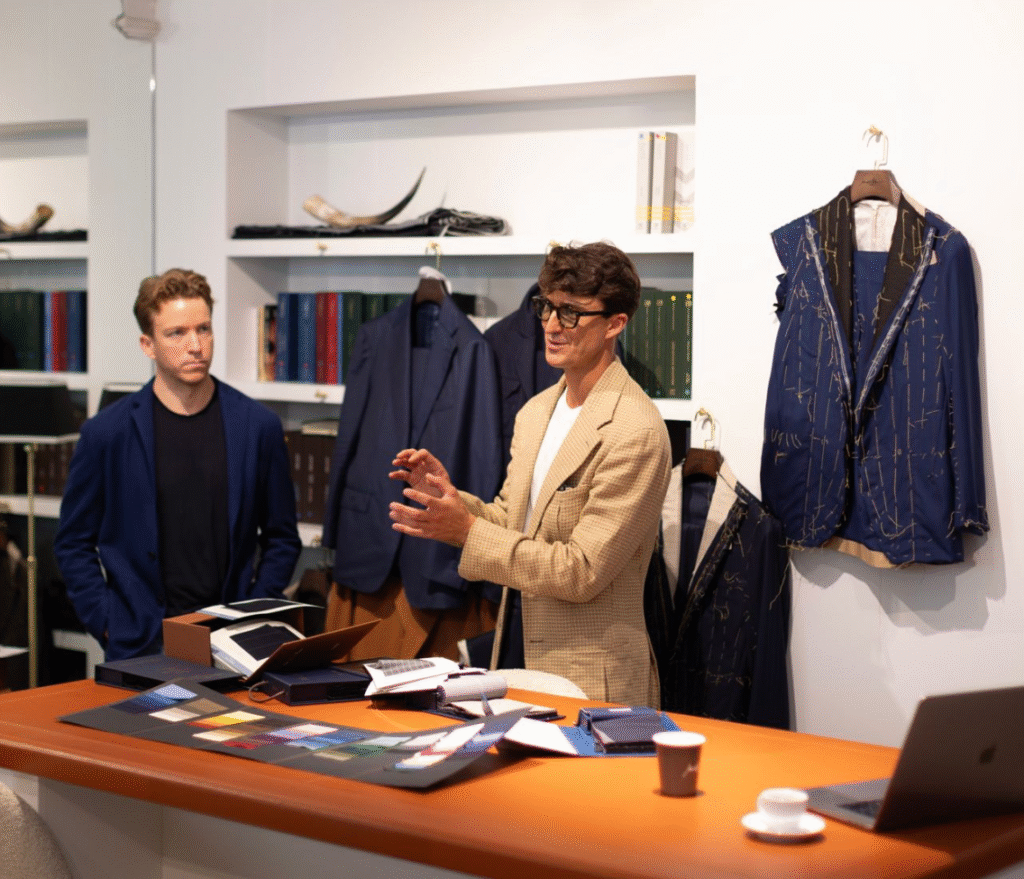
Milan, September 18, 2025 – The renaissance of custom tailoring has transformed how modern professionals approach their wardrobes. From Silicon Valley executives to Wall Street financiers, the demand for personalized suiting continues to surge as individuals seek garments that reflect their unique style and professional requirements.
Understanding Fabric Excellence
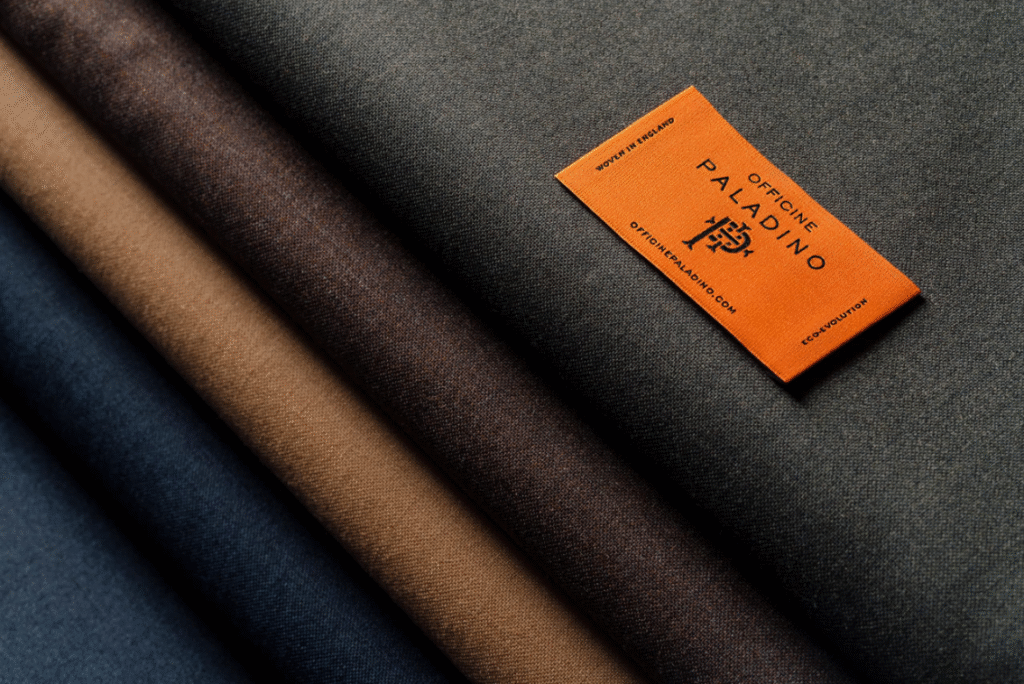
The foundation of any exceptional custom suit lies in fabric selection. Today’s discerning clients choose from an unprecedented range of premium materials:
Seasonal Considerations: Summer suits benefit from lightweight tropical wools (7-9 oz), while winter calls for substantial fabrics (12-14 oz) that provide warmth without bulk.
Performance Fabrics: Modern mills now offer wool blends with technical properties, including wrinkle resistance and moisture-wicking capabilities, perfect for the traveling professional.
Luxury Options: Vicuña, the world’s finest natural fiber, commands premium prices but offers unmatched softness and exclusivity. Similarly, cashmere-silk blends provide exceptional drape and lustrous finish.
The Art of Pattern Making
Tailor Creating Custom Patterns
Creating a custom suit pattern requires both technical precision and artistic vision. Master pattern makers consider numerous factors:
Body Analysis: Beyond basic measurements, tailors assess posture, gait, and lifestyle requirements to create patterns that accommodate individual characteristics.
Style Preferences: Whether favoring classic British styling with structured shoulders or Italian soft construction, each approach requires specific pattern adjustments.
Functional Details: Custom suits incorporate practical elements such as interior pockets for technology devices, pen holders, and ticket pockets tailored to the client’s professional needs.
Construction Excellence
The construction phase represents the culmination of traditional craftsmanship and modern precision. Key elements include:
Hand-Padded Chest Pieces: Skilled artisans shape the suit’s chest using layers of horsehair canvas, creating a natural drape that molds to the wearer’s body over time.
Floating Canvas: This construction method allows the suit to move naturally with the body while maintaining its shape, distinguishing quality tailoring from mass production.
Buttonhole Craftsmanship: Hand-sewn buttonholes, known as “milanese” style, require exceptional skill and add both functionality and aesthetic appeal
The Fitting Process Revolution
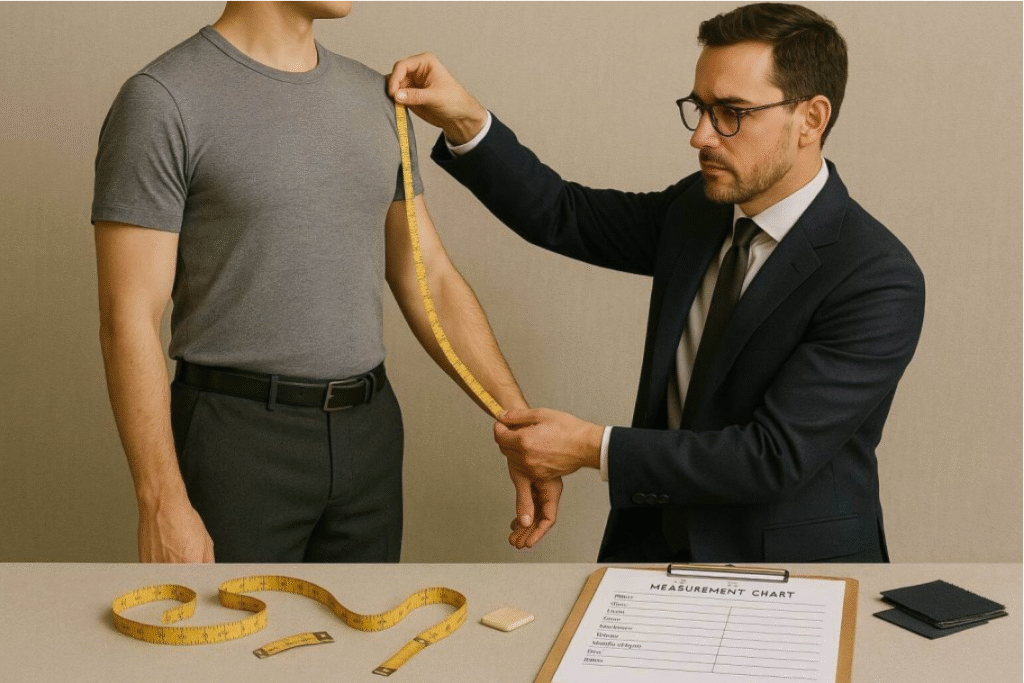
Modern custom tailoring has revolutionized the fitting experience through innovative approaches:
Virtual Consultations: Leading tailors now offer remote consultations, enabling clients worldwide to access premium tailoring services.
3D Body Scanning: Advanced technology creates precise digital measurements, reducing fitting appointments while improving accuracy.
Lifestyle Integration: Contemporary fittings consider the client’s daily activities, from boardroom presentations to evening events, ensuring versatility in every garment.
Investment and Value
Custom suiting represents a significant investment, with prices reflecting the extensive craftsmanship involved:
- Entry-level custom suits: $2,000-$4,000
- Premium bespoke: $5,000-$10,000
- Ultra-luxury options: $12,000+
However, the cost-per-wear calculation often favors custom suits, which typically last decades with proper care, compared to off-the-rack alternatives requiring frequent replacement.
Future Trends in Custom Tailoring
The industry continues evolving with sustainability initiatives, including:
Eco-conscious Fabrics: Mills increasingly offer organic and recycled fibers without compromising quality.
Local Sourcing: Emphasis on regional fabric production reduces environmental impact while supporting traditional textile communities.
Circular Fashion: Many tailors now offer alteration and refurbishment services, extending garment lifecycles indefinitely.
As the custom tailoring industry adapts to changing professional landscapes and environmental concerns, the core principles of craftsmanship, personalization, and quality remain unchanged, ensuring this ancient art continues to serve modern needs with timeless elegance.